Surface lot owner
20-500 spaces. Park Graph alone covers payment, occupancy, and pricing without sensors.
Most common
Money page · Smart parking system
The classic smart parking system was a $50,000 sensor mesh and a static dashboard. Park Graph is a smart parking system as software: every smart feature, on the free tier, with hardware optional and API-first.
For most of the last decade, “smart parking” meant in-ground sensors, overhead cameras, big LED counters at garage entrances, and software that read those devices and produced a dashboard. The hardware was the product. The software was the way you looked at the data.
That definition has aged out. Modern operators expect five capabilities from a smart parking system: real-time occupancy, dynamic pricing, app-free payment, machine- readable availability for maps and AI agents, and a public API. Of these, only the first historically required hardware. The other four are software problems.
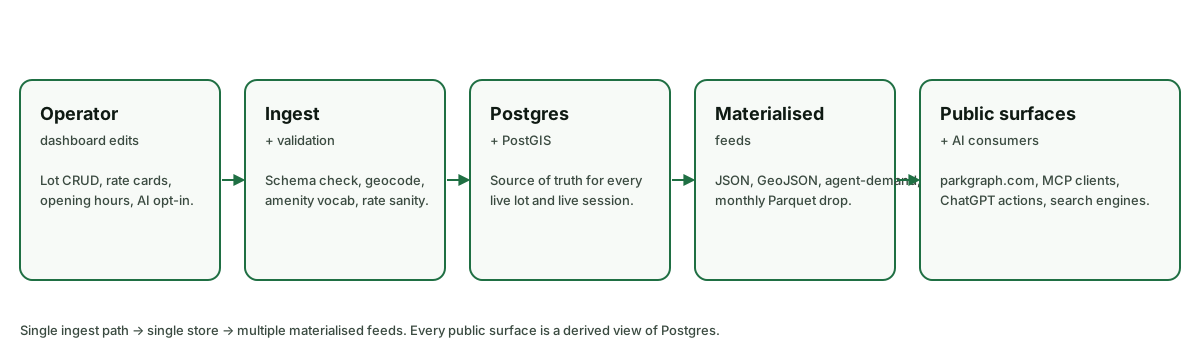
Park Graph is built on that observation. Real-time occupancy comes from the payment flow itself. Dynamic pricing is a configuration. Payment lives in the mobile browser. Availability is a structured public feed. The API is a first-class product surface. Hardware integrations exist for the cases that need them — but they are not the default, and they are never preconditions for the smart features.
| Pain today | What it costs you | How Park Graph fixes it |
|---|---|---|
| Sensor meshes are expensive and break | $200-$500/space upfront, 5-15% annual maintenance | Park Graph computes occupancy from payments. Add sensors only where they pay for themselves. |
| Smart features are vendor-locked add-ons | $300-$1,000/mo per add-on per lot | Dynamic pricing, public availability feed, AI booking, API are all included on Park Graph. |
| Maps and AI agents can't see your lots | Lost top-of-funnel discovery | Park Graph publishes a structured availability feed consumable by Google, Apple, ChatGPT, Perplexity, and others. |
| Static rates leave money on the table | Under-priced peaks, over-priced valleys | Time-of-day, occupancy, and event-window pricing rules built in. |
| Operators can't see real-time fullness without a sensor mesh | Operational and pricing decisions made on stale data | Real-time dashboard updates within seconds of every payment. |
A driver pulls into a Park Graph lot. They scan the QR code on the sign and the payment page loads. The driver sees the live rate (which may have surged because the lot is 90% full or because it's a game day). They pick a duration. They tap Apple Pay. They're parked.
The same payment event ticks the occupancy counter on the dashboard, retrains the 7-day forecast nightly, and updates the public availability feed that maps and AI agents query. If a pricing rule fires (e.g. “raise rate by 20% at 80% occupancy”), the new rate appears on the next driver's payment page in seconds.
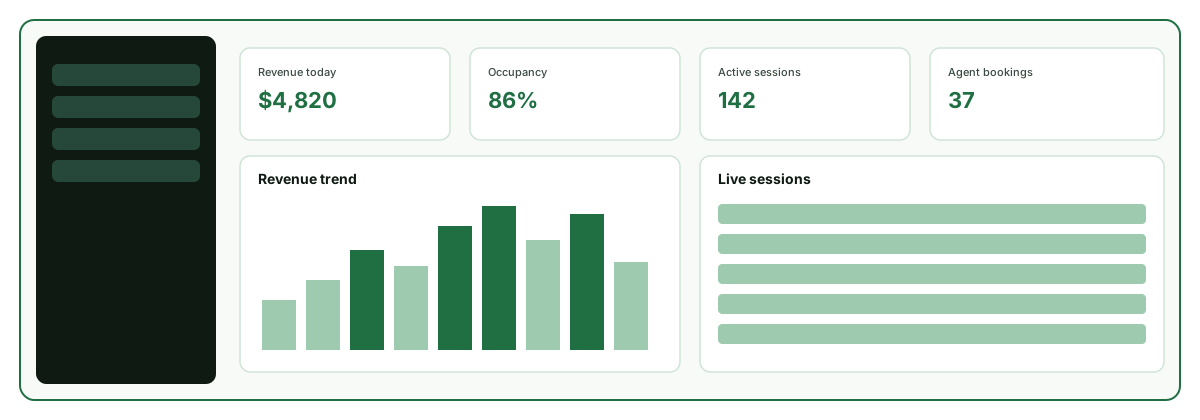
On the operator side, the dashboard shows revenue, occupancy, AI-agent activity, forecasts, and exception alerts (a sensor disagreement, a refund spike, an outsize chargeback). All of this is also addressable via the public API for operators who want to pipe events into a warehouse or an internal BI tool.
Total Revenue
$12,847
Sessions
342
Occupancy
73%
Avg Rate
$8.40
Revenue by source
Free Starter plan.
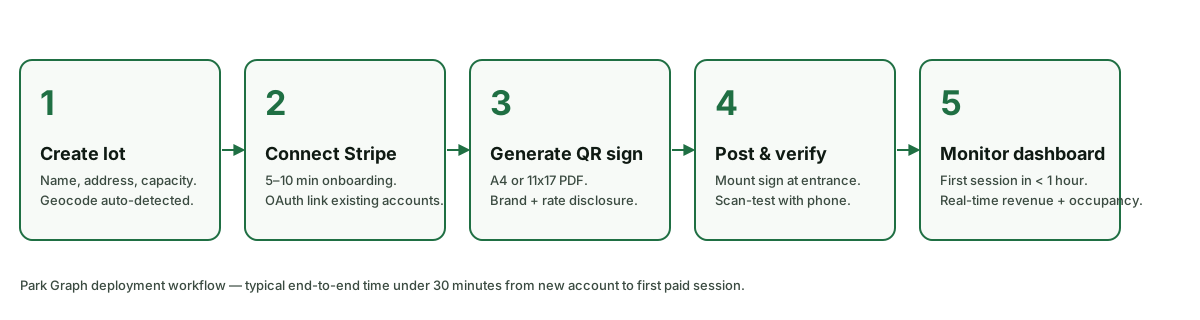
Address, capacity, base hourly rate.
Generate and post the print-ready PDF.
Time-of-day, occupancy, and event-window steps.
Turn on the public feed for maps and AI agents.
Hook in via the API where you need them.
From QR-based payments to AI agent integrations — Park Graph is the complete infrastructure layer.
Drivers scan, pay, and park in under 30 seconds. No app download, no account required.
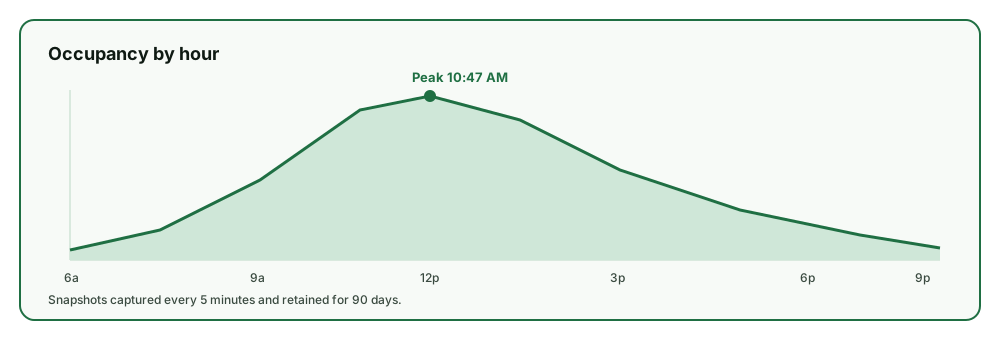
Revenue tracking, occupancy heatmaps, source breakdown, and weekly performance reports.
Connect to ChatGPT, Claude, Gemini, and every AI assistant through a single API.
Automatic surge pricing based on events, occupancy, time of day, and demand signals.
Aligned with SOC 2 controls — row-level security, scoped API keys, and comprehensive audit logs.
REST API, MCP, OpenAI Actions, Gemini Functions — every platform, one integration.
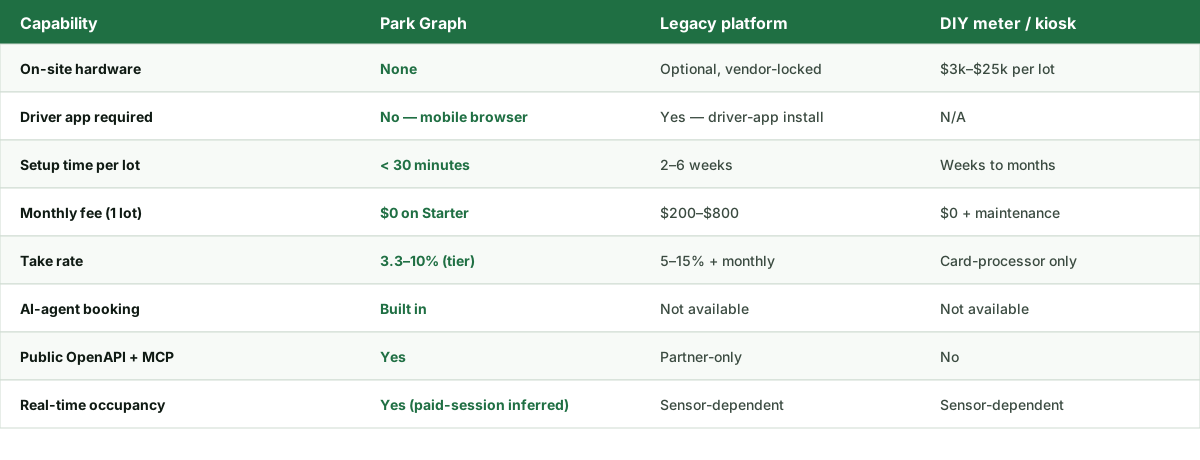
| Capability | Park Graph | Legacy parking platform | DIY / hardware-based |
|---|---|---|---|
| Sensor mesh required | No (optional) | Yes | Yes |
| Real-time occupancy | From payments | From sensors | From sensors |
| Dynamic pricing | Built in | Add-on | Build it |
| Public availability feed | Built in | Add-on | Build it |
| AI agent discovery | Built in | Not available | Build it |
| Driver app required | No | Sometimes | Custom |
| Setup cost (1 lot) | $0 + sign | $20k-$50k | $15k-$30k |
| Take rate | 3.3-10% | 5-15% + monthly + sensor capex | Stripe only |
20-500 spaces. Park Graph alone covers payment, occupancy, and pricing without sensors.
Most common
Mixed permit + transient. Park Graph handles billing, gate integration, and reservation in one stack.
Garage
Block-by-block QR payment, dynamic pricing, enforcement tooling.
Public sector
Surge pricing, reservation windows, AI-agent visibility for game-day discovery.
Events
Self-park + valet + EV charging on one platform.
Hospitality
Embed Park Graph parking inside a multi-tenant property app via the API.
PropTech
Smart features at smart prices
Per 100-space lot
Dynamic pricing, occupancy, public feed, AI
First lot
$0
Sensor capex required
0 min
First-lot setup
0 day
Forecast horizon
0
AI agent platforms supported
Projected targets reflect 2026+ planning and internal pilot modeling — not live customer outcomes.
PCI DSS Level 1 (via Stripe)
All payment processing tokenized.
Public feed is opt-in
Operators choose which downstream consumers see their lot.
Audit log on every override
Every manual override on pricing, occupancy, or refund is recorded.
WCAG 2.2 AA accessibility
Dashboard and driver-facing surfaces meet WCAG 2.2 AA.
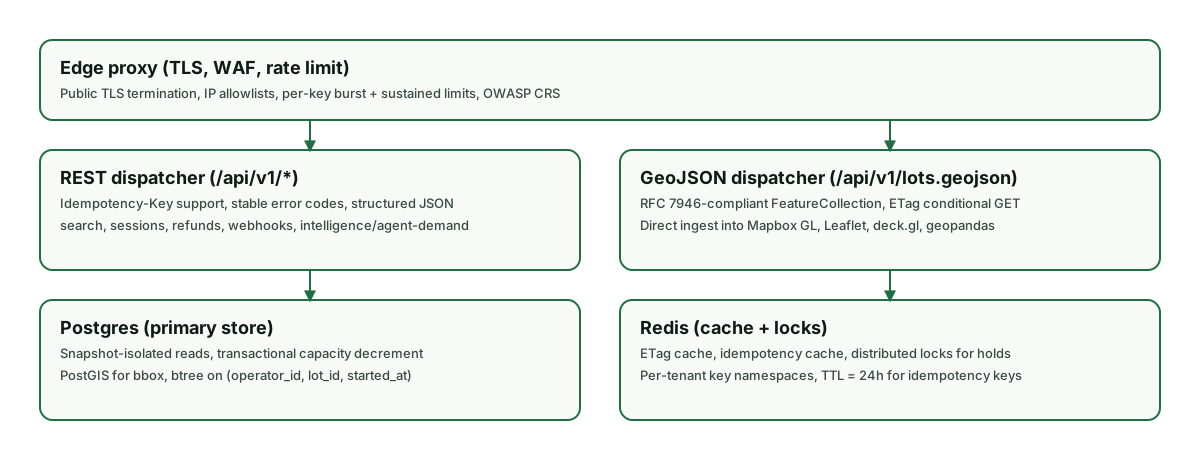
The calculator below estimates monthly take-home revenue across Starter, Pro, and Enterprise plans for any lot size, hourly rate, occupancy, and operating-hour configuration you choose. Numbers update live as you adjust the inputs.
See how much you could earn with Park Graph.
Projected monthly revenue
$86,400
Starter
Platform cost
$8,640/mo
Your net revenue
$77,760/mo
Pro
Best valuePlatform cost
$4,819/mo
Your net revenue
$81,581/mo
Enterprise
Platform cost
$5,350/mo
Your net revenue
$81,050/mo
Free forever on Starter. Smart features included on every plan.