Last-mile delivery
100-vehicle last-mile fleet across one metro. Drivers scan QR signs at compliant lots near each delivery stop. Sessions bill to the fleet card; per-route cost rolls up nightly.
Per-route reporting
Vertical solution
Fleet parking that reconciles to the vehicle, the driver, and the route. Fleet parking is a hidden expense line that nobody owns. Drivers expense it on the receipts app, the controller approves the receipts blind, and parking shows up as a $400k-per-year line item on the budget that nobody can break down by vehicle, driver, or route. Park Graph fixes that by treating each parking session as a structured event tagged to the vehicle and the route.
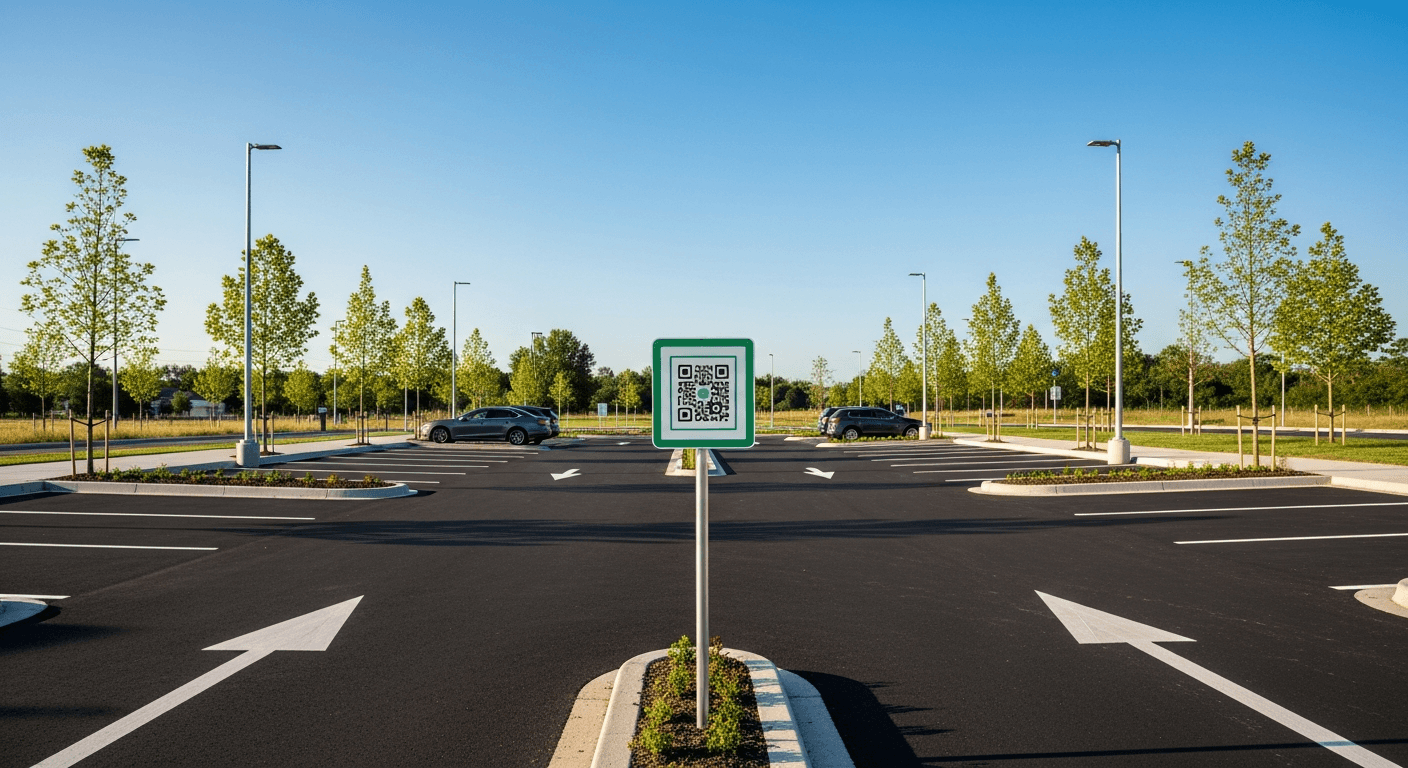
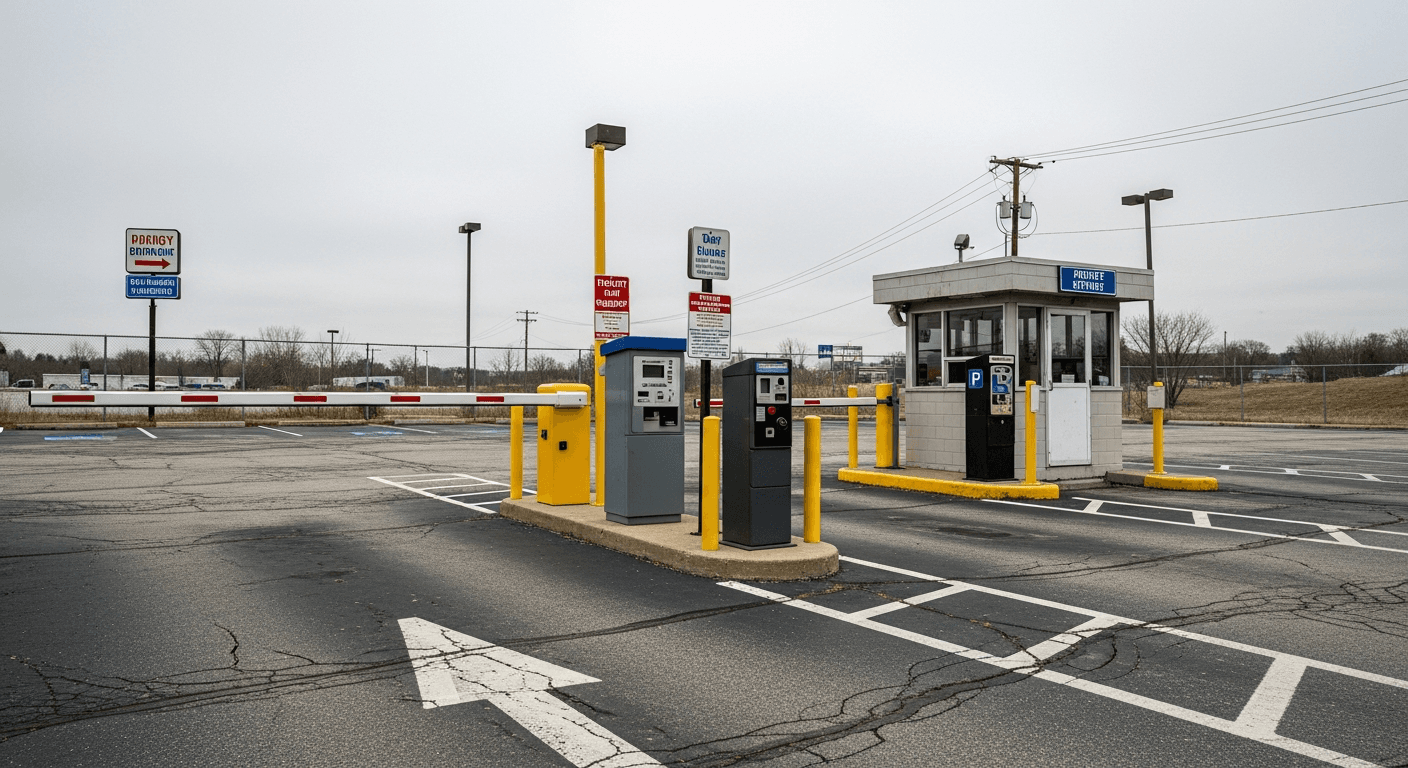
Fleet parking is a structurally underserved category. The major fleet management platforms (Geotab, Samsara, Verizon Connect, Motive) cover everything from ELD compliance to vehicle health, but treat parking as an expense-app problem. The major parking platforms cover everything from gate hardware to driver apps but treat fleets as a niche customer. Park Graph sits in the gap.
Our fleet customers fall into four buckets: corporate motor pools (sales fleets, exec fleets), last-mile and long-haul delivery (Amazon DSPs, UPS contractors, regional carriers), mobile-service fleets (HVAC, plumbing, residential cleaning, telecom field service), and rideshare or gig-economy fleets where the operator is the platform but parking is a per-driver allowance.
All four want the same things from parking software: per-vehicle reconciliation, fleet-card billing without MCC declines, per-route or per-job tagging, and a driver-facing assistant that helps the driver find compliant parking near a stop without making them call dispatch. Park Graph delivers all four.
| Pain today | What it costs you | How Park Graph fixes it |
|---|---|---|
| Drivers expense parking on photo-of-receipt apps | 5-15 min/driver/day, fraud risk, no per-route reporting | QR scan auto-bills the fleet card. No receipt, no expense report. |
| Fleet card declines at legacy meters because of MCC mismatch | Driver fronts cash, expenses with delay | Park Graph processes through Stripe with the right MCC. Fleet cards work first try. |
| Parking expense rolled up by month, not by vehicle or route | No way to identify high-cost routes or vehicles | Per-vehicle, per-route, per-driver reporting in dashboard. Filterable, exportable, API-accessible. |
| Drivers can't find compliant parking near a delivery stop | Tickets, towing, customer-delivery delays | Driver-facing AI assistant recommends compliant Park Graph lots within walking distance of the delivery stop. |
| Per-trip reimbursement requires manual approval workflow | Controller spends 8-15 hours/month approving parking receipts | Park Graph batches per-vehicle parking into the existing fuel-card statement. Controller approves the statement, not individual receipts. |
A delivery driver pulls into a city block to drop off a package. Their phone (or the in-cab tablet) recommends three Park Graph lots within 200 feet of the stop with current availability and rate. They scan the QR sign at the closest one; the session bills to the fleet card with the route ID and vehicle ID auto-tagged.
Back at HQ the operations director sees the session in real time tied to the route. At month-end the controller receives a single statement per fleet card with per-vehicle breakdown, instead of approving 4,500 individual photo-of-receipt expense entries. Concur, SAP Ariba, or the custom expense system receives the per-vehicle export nightly.
When the operations team wants to know which routes have the highest parking cost, the dashboard answers in two clicks. When the executive team wants to renegotiate a fleet-card processor based on MCC mismatch rates, the data is there.
WEX, Comdata, Voyager, U.S. Bank Voyager. Park Graph reads card metadata; sessions auto-bill to the right card.
Bulk-import via CSV: vehicle ID, licence plate, assigned driver(s), route(s).
Map routes to vehicles or to time-of-day windows. Park Graph tags each session with the active route at scan time.
Drivers add Park Graph to home screen. Camera-tap launches scan flow with vehicle and driver pre-filled.
Concur, SAP Ariba, custom finance systems. Per-vehicle parking exports nightly.
Run a single route for two weeks. Compare expense-report parking spend to Park Graph parking spend. Iterate.
Most fleet parking deployments are live within a day. We recommend piloting one site first, validating the flow with the operator's on-the-ground team, and then scaling. Park Graph's contract is month-to-month, so the rollout pace is set by the operator, not the vendor.
100-vehicle last-mile fleet across one metro. Drivers scan QR signs at compliant lots near each delivery stop. Sessions bill to the fleet card; per-route cost rolls up nightly.
Per-route reporting
200-vehicle corporate motor pool covering a regional sales force. Each pool vehicle is registered; reservations on the corporate booking tool tag the parking session.
Pool integration
Truck drivers park overnight at compliant truck-friendly lots. Park Graph tags each session by route and by hours-of-service compliance window.
Hours-of-service compliant
Mobile-service technicians park at job sites. Per-customer billing roll-up; parking cost shows up on the customer invoice automatically.
Per-job billing
Independent rideshare drivers operate as a fleet for billing purposes. Each driver gets a per-trip parking allowance; over-allowance auto-billed back to the driver.
Per-driver allowance
Outside sales reps park at customer offices and prospect sites. Parking auto-tagged to the customer record in Salesforce via the Park Graph webhook.
CRM integration
| Capability | Park Graph | Legacy parking platform | DIY / hardware-based |
|---|---|---|---|
| Fleet-card billing | Native (WEX, Comdata, Voyager, U.S. Bank) | Often declines on MCC | Driver fronts cash |
| Per-vehicle reconciliation | Native | Custom configuration | Photo-of-receipt apps |
| Per-route reporting | Native | Not available | Spreadsheets |
| Driver-facing parking assistant | Built in (AI-powered) | Not available | Driver Googles |
| Expense-report integration | Concur, SAP Ariba, custom | Per-vendor projects | Manual entry |
| Setup time | <1 day per fleet | 2-6 weeks | Months |
| Take rate | 3.3-10% (tier-dependent) | 8-15% + monthly | Card-processor fees only |
| AI agent visibility for compliant parking | Yes — every Park Graph lot exposed | Not available | Not available |
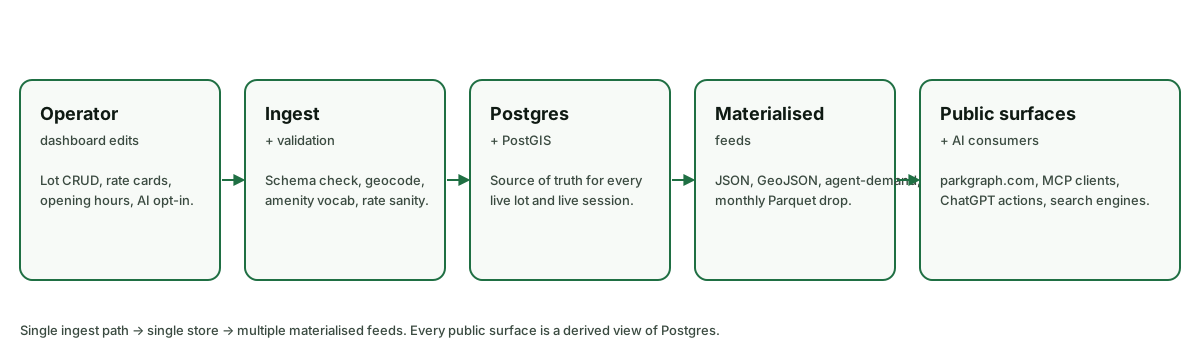
The legacy column generalises the experience of working with a vertical-specific legacy vendor. Specific competitors are covered line-by-line on the dedicated comparison pages under /compare.
The map below shows the metro markets and corridors Park Graph is targeting for fleet parking growth in 2026 and beyond. Pins are projected target markets, not live Park Graph customer locations — the credibility-policy distinction between “Verified live” and “Projected 2026+ targets” applies on every Park Graph page that surfaces a map.
Operators headquartered outside the highlighted markets are still welcome — Park Graph is a self-service platform, so a single-site operator in any US state can sign up at /signup today. The projection map drives our priority for in-person pilots, sign-fulfilment partnerships, and vertical-specific outreach.
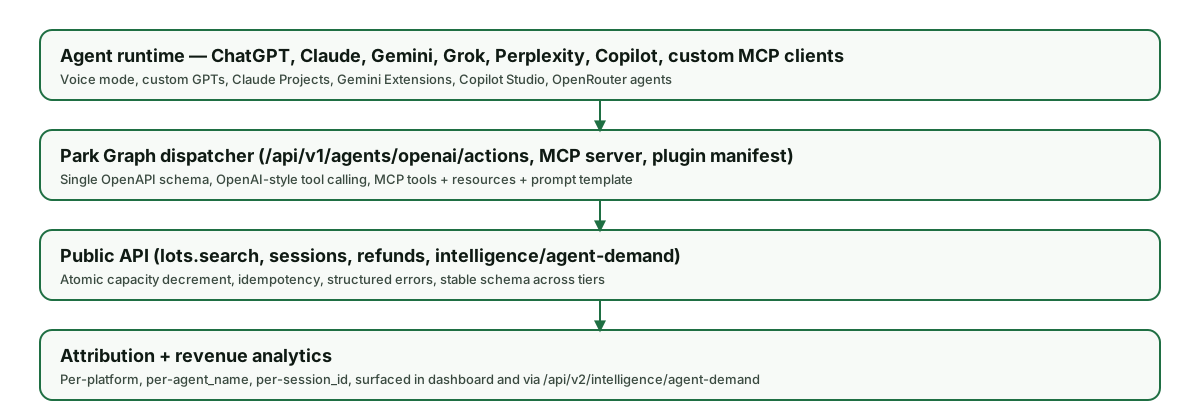
Drivers in the field use AI assistants more every quarter — often inside the dispatch app, sometimes on their personal phone. Park Graph publishes every lot's availability, rate, and time-of-day rules to ChatGPT, Perplexity, Gemini, Grok, and Microsoft Copilot. A driver who asks "compliant parking near 5th and Broadway right now" gets a real answer with a real lot.
Fleet operators can configure the AI integration with vehicle-specific filters: truck-friendly lots only, lots that accept the fleet card, lots within a hours-of-service-compliant distance of an upcoming rest stop. Park Graph's structured availability feed exposes the right metadata for those filters.
Driver: 'Where can I park near 5th and Main for a 20-minute drop?'
Park Graph: '50 ft west on Main — Park Graph Lot A, $1.50 for 30 min, accepts WEX. Reply DIRECTIONS for map.'
Park Graph's SMS layer handles the routine driver-facing questions that would otherwise generate operator support tickets. The exchange above is a real example from the fleet parking vertical; AI handles roughly 90% of these conversations end-to-end with no human escalation.
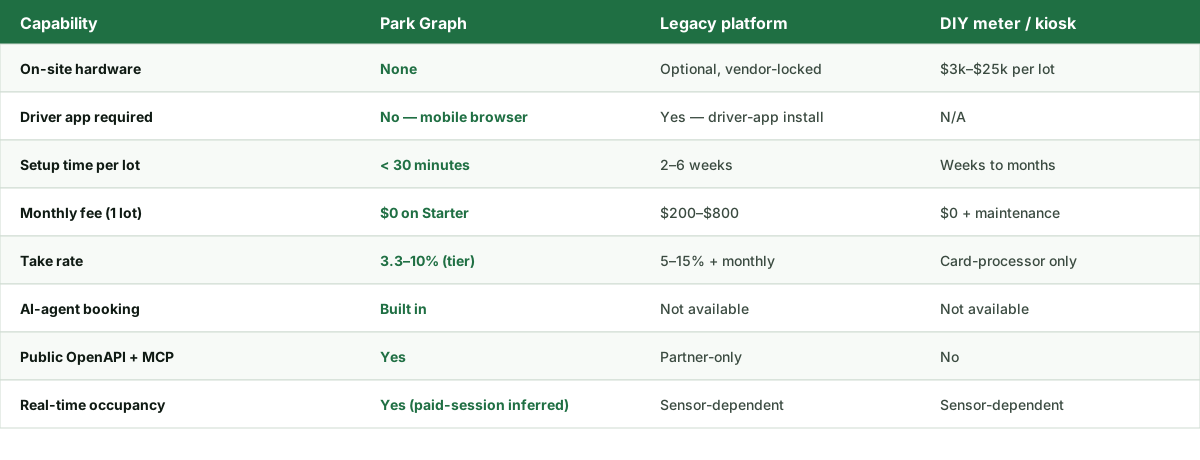
Why fleet parking operators switch
Eliminates photo-of-receipt workflow
Statement-level approval, not per-receipt
Of gross at Enterprise rate
Numbers are typical first-year deltas reported by Park Graph operators in this vertical relative to their previous platform.
The economics behind Park Graph in this vertical are simple to model. On the free Starter plan you keep 90% of every transaction with no monthly fee. On Pro at $499/month you keep 95% of every transaction. On Enterprise you keep 96.7%. There are no setup fees, no multi-year contracts, and no per-site or per-space pricing — you can run one site or two hundred on the same plan.
The calculator below estimates monthly take-home revenue across Starter, Pro, and Enterprise plans for any site size, hourly rate, occupancy, and operating-hour configuration you choose. Numbers update live as you adjust the inputs.
0%
Take-home rate (Enterprise)
0 day
Typical site setup
$0
Hardware required
0
AI agent platforms supported
Projected targets reflect 2026+ planning and internal pilot modeling — not live customer outcomes.
See how much you could earn with Park Graph.
Projected monthly revenue
$86,400
Starter
Platform cost
$8,640/mo
Your net revenue
$77,760/mo
Pro
Best valuePlatform cost
$4,819/mo
Your net revenue
$81,581/mo
Enterprise
Platform cost
$5,350/mo
Your net revenue
$81,050/mo
PCI DSS Level 1
Card data tokenized by Stripe; Park Graph never sees raw card numbers.
Aligned with SOC 2 controls
Audit window opens Q3 2026. Annual reports available under NDA on request.
Encrypted at rest + in transit
AES-256 at rest, TLS 1.3 in transit, KMS-managed keys.
Vertical-specific data handling
Fleet-card data is processed via Stripe with the appropriate MCC. Park Graph never stores raw card numbers; the fleet-card token is held by Stripe under PCI DSS Level 1. Driver phone numbers are scoped to the fleet's operator account and not exposed to the parking lot owner.
Free forever on Starter. No credit card to begin. Cancel any time.
Pricing, event surge curves, and on-site context for fleet parking vary by metro. The pages below are the city-specific playbooks — same Park Graph platform, tuned to the local rate baseline and demand calendar.
The installation
No gate to wire. No meter to bolt down. No technician to schedule. Watch an owner take a lot live in four steps — the last one is a real code, mounted on a real post.
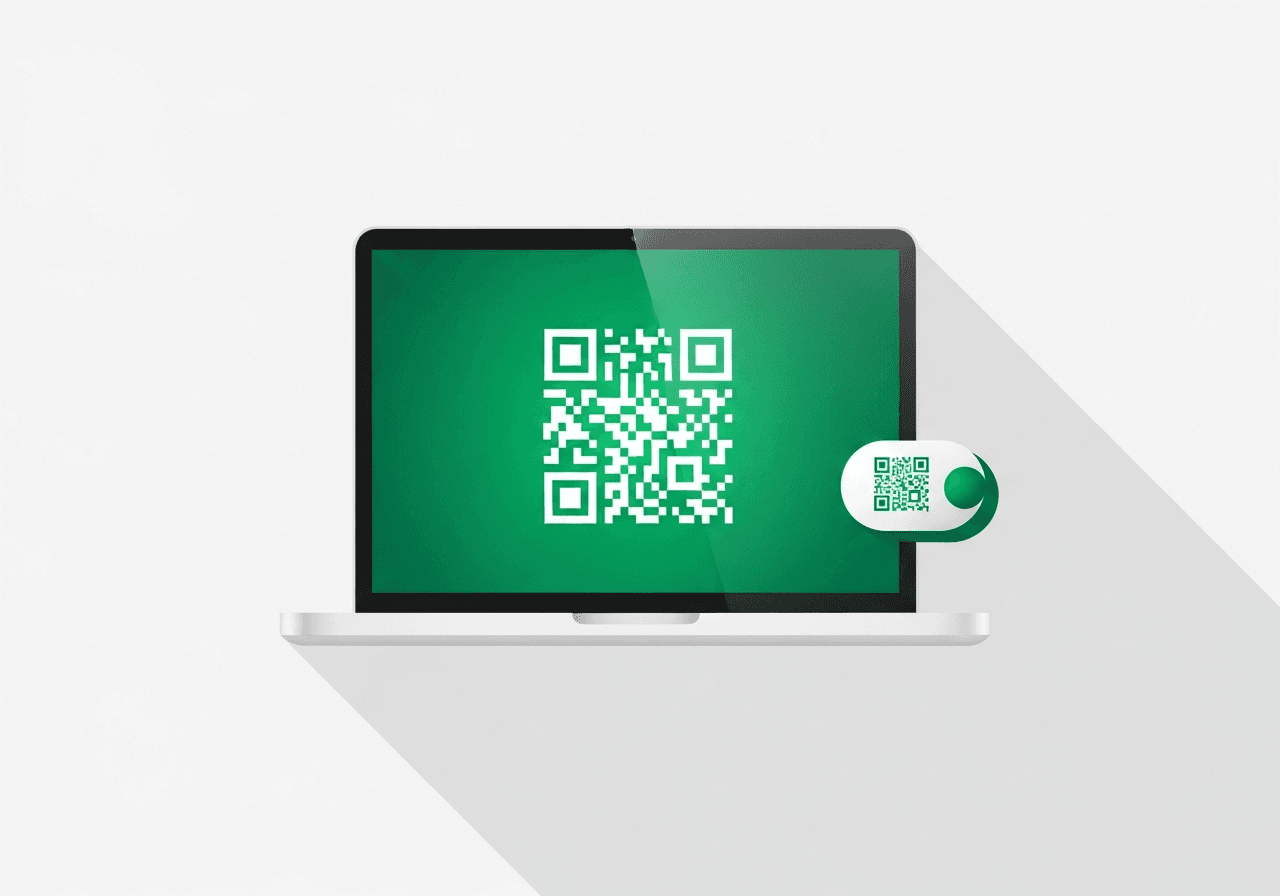 1
1Enter your lot name, spaces, and rate. Park Graph mints a branded QR code that links straight to your payment page.
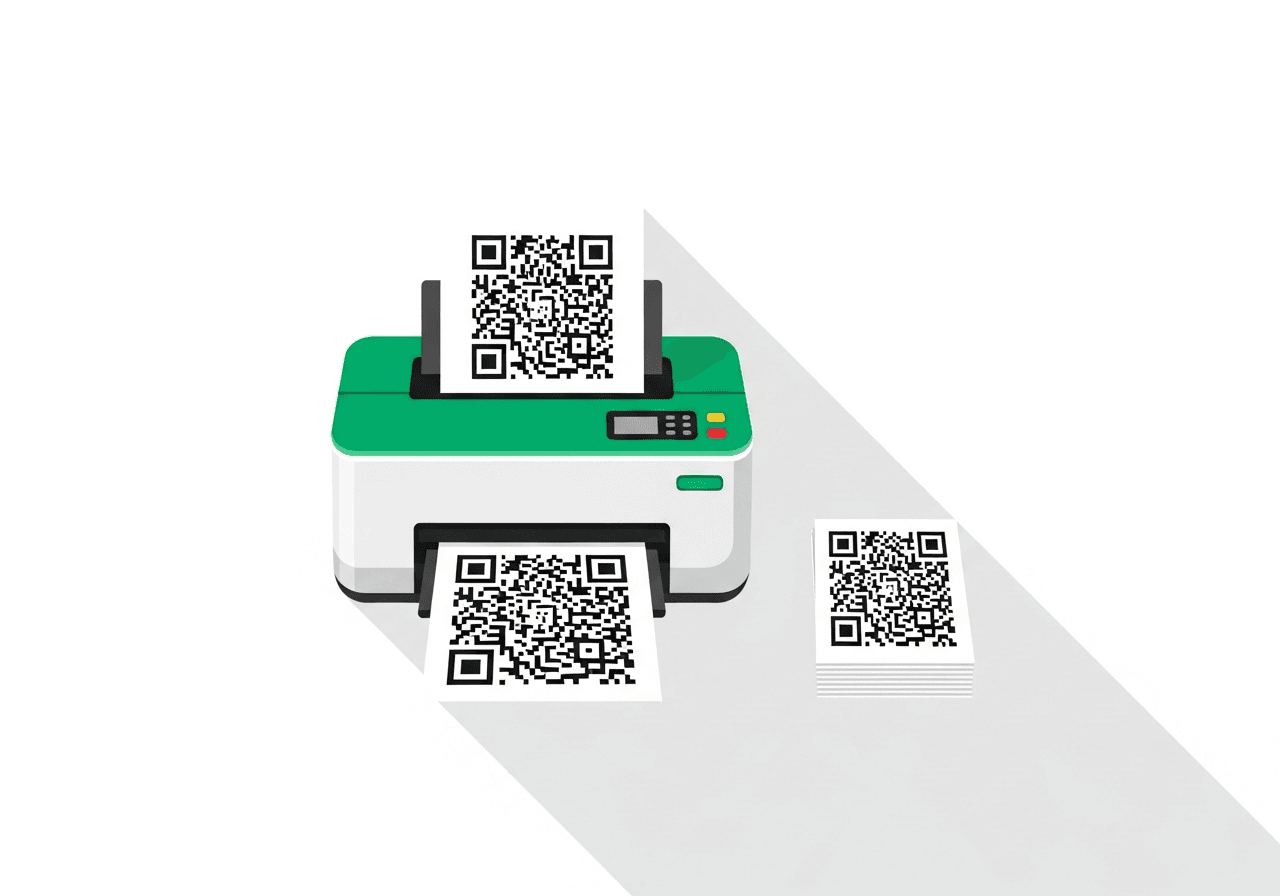 2
2Send it to any standard printer. Laminate the sheet for weather protection — that is your entire hardware bill.
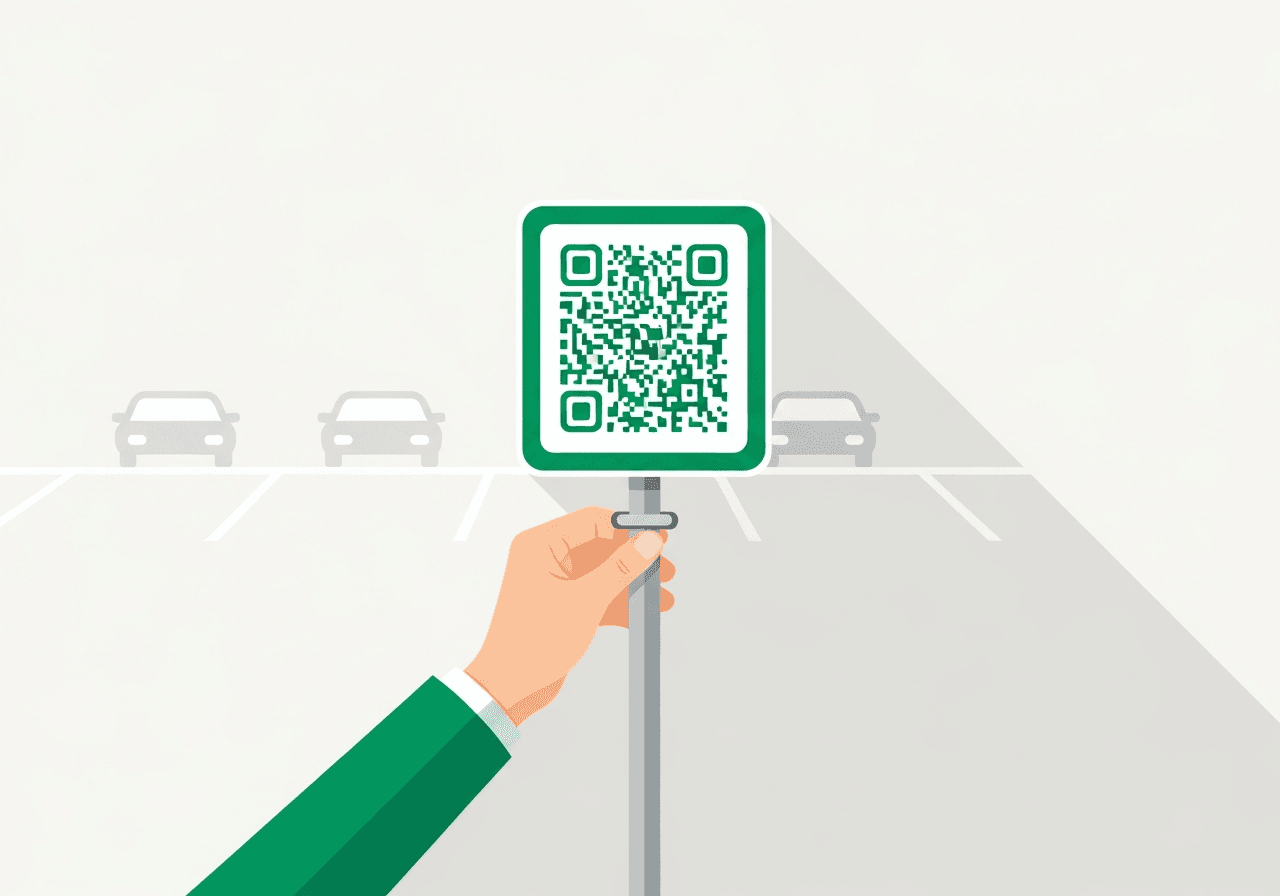 3
3Mount it on a post at the entrance and any major pedestrian path. No gates, no wiring, no installer visit.
 4
4Your first payout arrives 7–14 days after your first payment. That is Stripe's standard for new accounts. After that, payouts follow your plan's schedule. Verified lots are paid 2 business days after each payment.