Class-A office tower in CBD
55-floor tower with 1,200-space garage. Tenants validated via building app; public parking sold evenings and weekends. Asset manager sees per-tenant utilisation.
Class-A office
Vertical solution
Commercial real estate parking that monetises every space without an attendant. Commercial real estate parking is a structural underuse problem. Office garages sit empty after 6pm and on weekends; the operator collects nothing while the asset depreciates. The job of software is to fill the empty hours without disrupting the tenant lease commitments. Five issues come up in every CRE owner conversation.
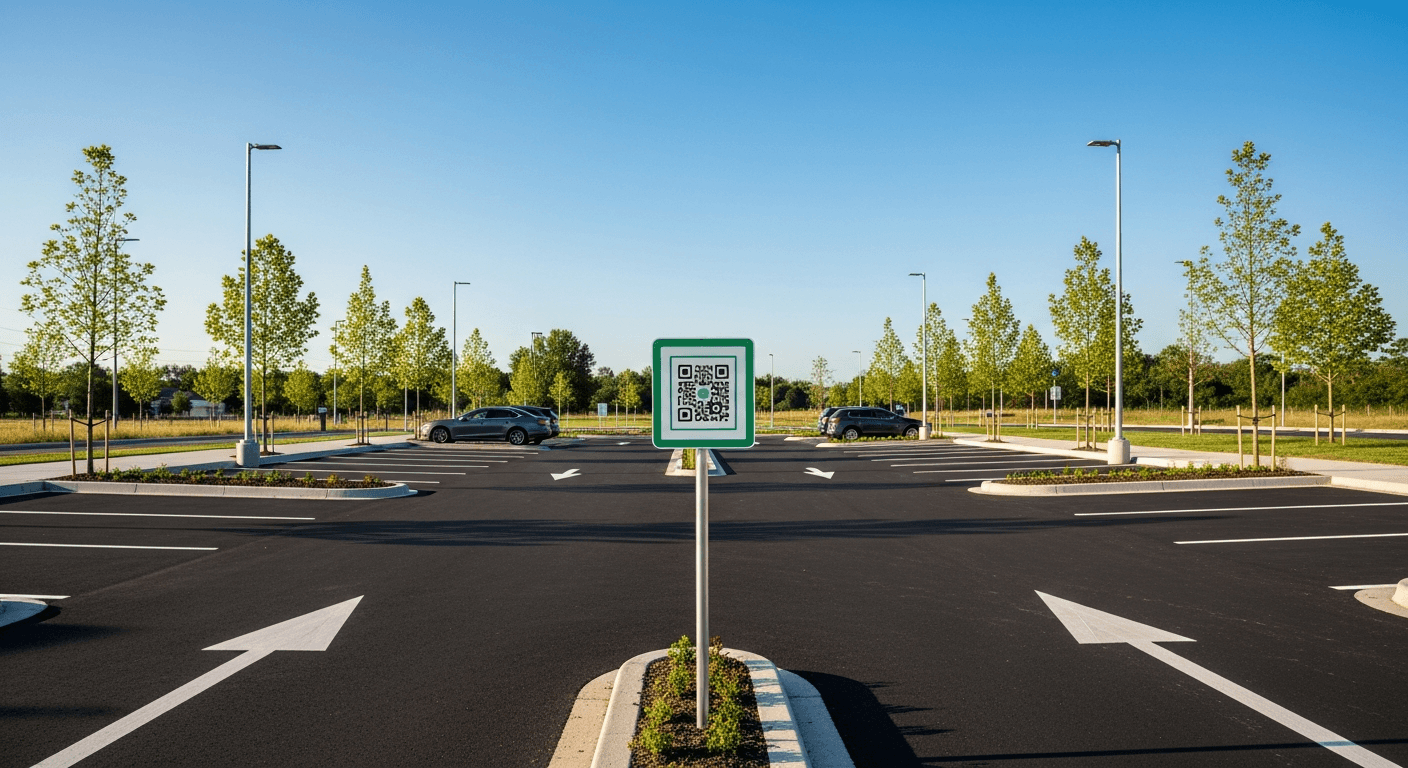
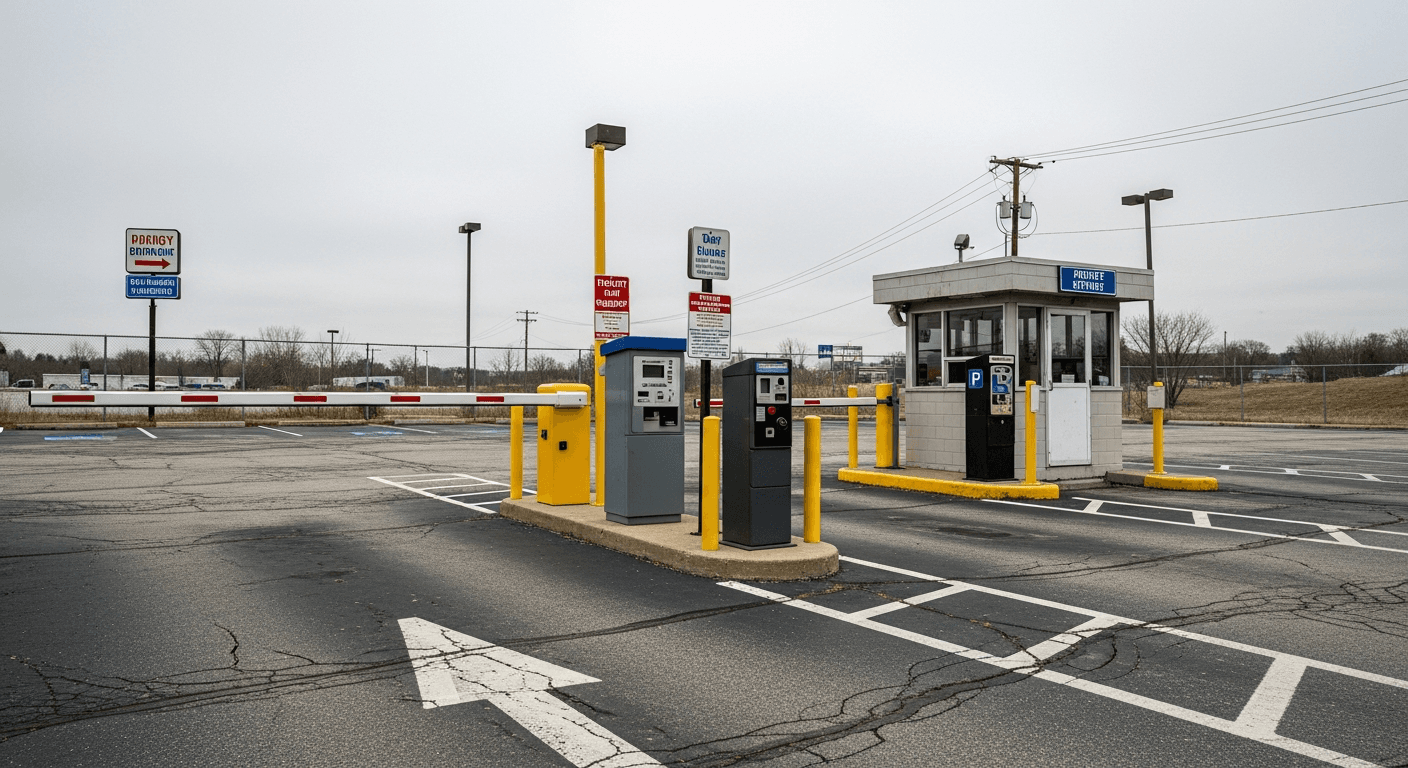
Commercial real estate parking is mostly an asset-management problem, not a parking problem. The asset manager's job is to maximise NOI per square foot; underused parking is a depreciating asset. Park Graph's job is to monetise the empty hours without disrupting the tenant lease commitments.
We work with Class-A office tower owners, suburban office park operators, mixed-use developers, REITs, coworking operators, and medical office building managers. Most of our CRE customers run on Enterprise with portfolio-level reporting tied to the asset manager's NOI dashboard.
The integration story is centred on opex vs. capex. Park Graph is a monthly subscription, not a hardware purchase. Most office towers see ROI within 60 days because the empty-hour monetisation alone covers the platform fee within the first month of the AI-agent integration going live.
| Pain today | What it costs you | How Park Graph fixes it |
|---|---|---|
| Garage sits empty 6pm-7am and all weekend | Lost monetisation, depreciating asset | Park Graph publishes empty inventory to AI agents and the public on configurable hours. Public parking sells without a leasing office attendant. |
| Tenant validation requires a 4-digit code printed at the front desk | Front-desk slowdown, ticket-stub fraud | QR-based validation. Tenant taps Validate in the building app; the visitor's session is comped. |
| Tenant lease parking allocation managed in spreadsheets | Disputes at lease renewal, no real-time utilisation data | Per-tenant allocation tracked in dashboard with real-time utilisation. Asset manager sees underused allocations. |
| Reciprocal parking with neighbouring buildings impossible to track | Manual reconciliation, abandoned reciprocity programs | Park Graph supports reciprocal parking groups with cross-building billing. |
| ROI on parking modernisation hard to justify to ownership | Capex stuck in the budget, no project approval | Park Graph is opex, not capex. Monthly subscription, no hardware, ROI within 60 days for most office towers. |
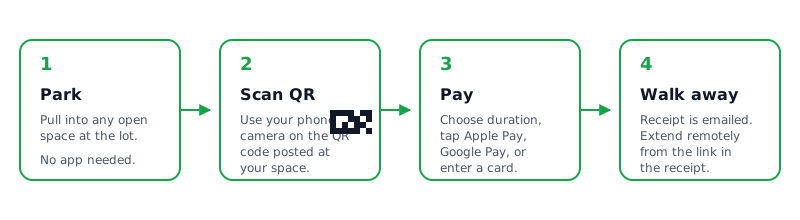
A visitor arrives at an office tower at 10am for a meeting. They pull into the garage, scan the QR sign at the entrance, and get the visitor rate. They go upstairs and check in with the tenant's front desk; the receptionist taps Validate on the visitor's record. The validation flows back to Park Graph; the session is comped.
After hours and on weekends the garage sells to the public. Park Graph publishes the empty inventory to ChatGPT, Perplexity, Gemini, Grok, and Microsoft Copilot. Public drivers find the lot, pay via QR, and park. The asset manager sees the new revenue line in the portfolio dashboard.
Tenant lease renewals come up; the asset manager pulls per-tenant utilisation data from Park Graph. Tenants who consistently underuse their allocation can be renegotiated; tenants who consistently overuse can be charged for the overage.
Each tenant lease allocates a number of parking spaces. Park Graph tracks per-tenant allocation and real-time utilisation.
Tenant front-desk staff get a one-click Validate button on visitor records. Visitor session is comped automatically.
Choose evening, weekend, and holiday windows when public parking is sold. Pricing is operator-configurable.
Group with neighbouring buildings to share parking. Cross-building sessions auto-bill at agreed rates.
Garage entrance, validation desk, public-parking entry. Print-on-demand QR signs.
Run the new flow on one tower for 60 days before scaling portfolio-wide.
Most commercial real estate parking deployments are live within a day. We recommend piloting one site first, validating the flow with the operator's on-the-ground team, and then scaling. Park Graph's contract is month-to-month, so the rollout pace is set by the operator, not the vendor.
55-floor tower with 1,200-space garage. Tenants validated via building app; public parking sold evenings and weekends. Asset manager sees per-tenant utilisation.
Class-A office
Multi-building office park with shared garage. Park Graph differentiates tenant, visitor, and public parking on one platform.
Office park
Office, retail, and residential in one development. Park Graph differentiates traffic and posts charges to the right cost centre.
Mixed-use
REIT-owned portfolio of 12 office assets across 4 metros. Park Graph centralises billing and provides portfolio-level utilisation reporting for the asset manager.
REIT portfolio
Building anchored by a coworking tenant. Coworking members validated via the coworking app; non-member visitors pay the visitor rate.
Coworking integration
Medical office building with patient validation. Each clinic validates its patients; the asset manager sees per-clinic utilisation.
MOB
| Capability | Park Graph | Legacy parking platform | DIY / hardware-based |
|---|---|---|---|
| Tenant allocation tracking | Native, real-time utilisation | Spreadsheets | Spreadsheets |
| QR-based validation | Native | Paper ticket + 4-digit code | Paper only |
| Public parking on configurable hours | Native | Custom configuration | Not available |
| Reciprocal parking groups | Native | Custom development | Not available |
| AI agent discovery for empty hours | Yes | Not available | Not available |
| Take rate | 3.3-10% (tier-dependent) | 8-15% + monthly | Card-processor fees only |
| Setup time per tower | <1 day | 4-12 weeks | Months |
| Capex vs. opex | Opex (subscription) | Capex + opex (hardware + monthly) | Capex (hardware) |
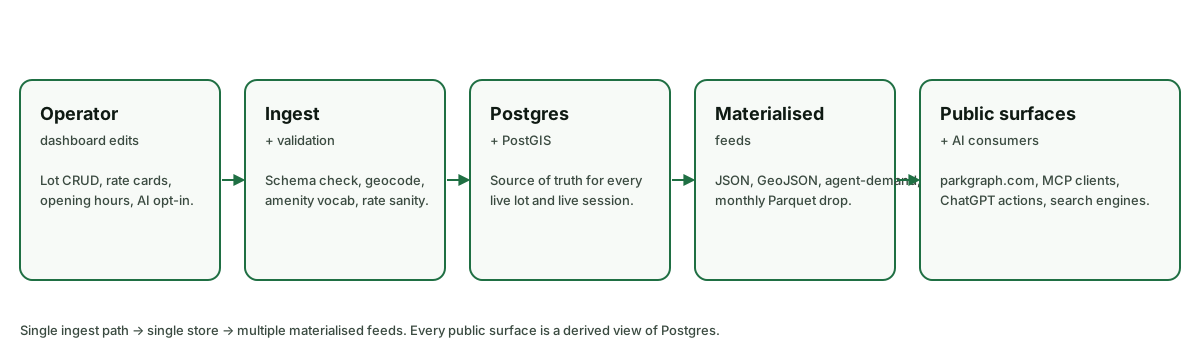
The legacy column generalises the experience of working with a vertical-specific legacy vendor. Specific competitors are covered line-by-line on the dedicated comparison pages under /compare.
The map below shows the metro markets and corridors Park Graph is targeting for commercial real estate parking growth in 2026 and beyond. Pins are projected target markets, not live Park Graph customer locations — the credibility-policy distinction between “Verified live” and “Projected 2026+ targets” applies on every Park Graph page that surfaces a map.
Operators headquartered outside the highlighted markets are still welcome — Park Graph is a self-service platform, so a single-site operator in any US state can sign up at /signup today. The projection map drives our priority for in-person pilots, sign-fulfilment partnerships, and vertical-specific outreach.
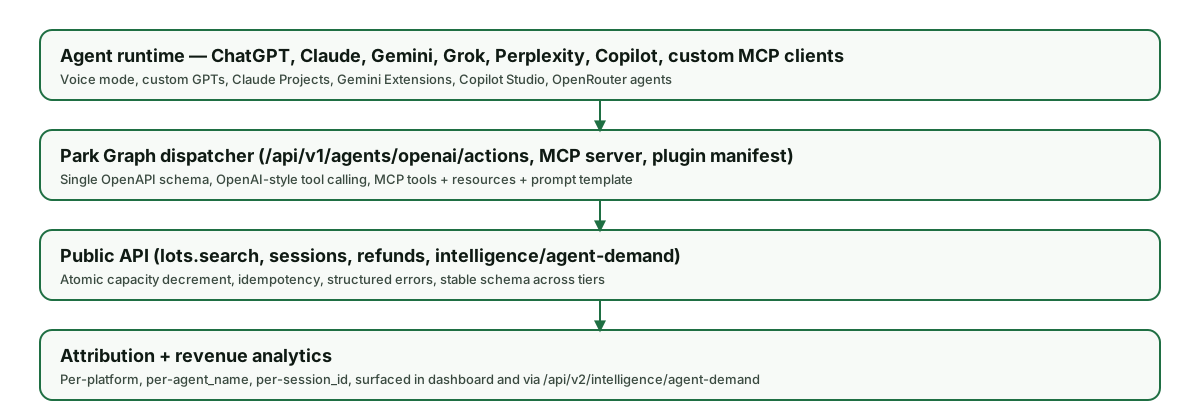
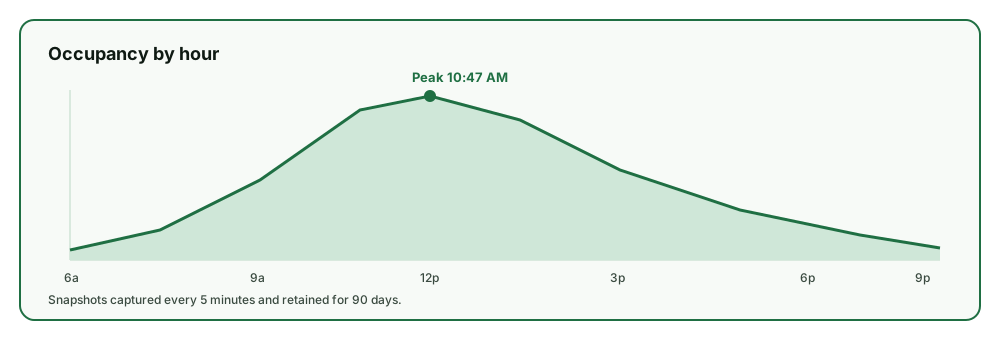
Public parking searches in CBD areas increasingly start with an AI agent — "where can I park near 5th and Broadway tonight under $20". Park Graph publishes empty office-tower inventory to AI agents during configured public-parking hours so towers monetise inventory that would otherwise sit empty.
The integration is configurable per tower. Asset managers can opt out of AI-agent discovery for specific towers (often for security reasons in sensitive buildings) and opt in for others.
Public driver: 'Is the office garage open Saturday?'
Park Graph: 'Yes — public parking 8am-8pm Saturday, $4/hr or $18/day. Reply MAP for entrance directions.'
Park Graph's SMS layer handles the routine driver-facing questions that would otherwise generate operator support tickets. The exchange above is a real example from the commercial real estate parking vertical; AI handles roughly 90% of these conversations end-to-end with no human escalation.
Why commercial real estate parking operators switch
Garage sells empty hours via AI agents and public parking
Vs. legacy gate + LPR install
Of gross at Enterprise rate
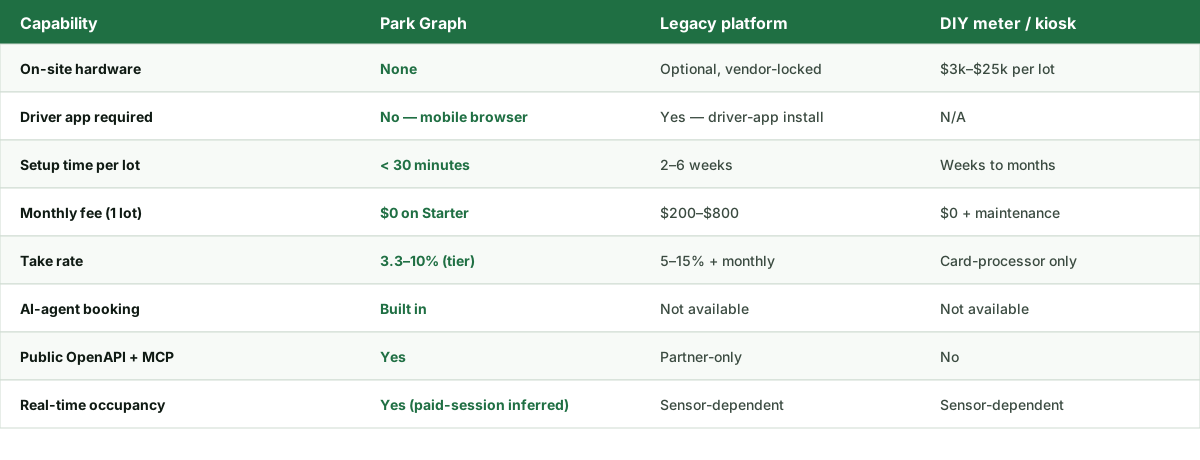
Numbers are typical first-year deltas reported by Park Graph operators in this vertical relative to their previous platform.
The economics behind Park Graph in this vertical are simple to model. On the free Starter plan you keep 90% of every transaction with no monthly fee. On Pro at $499/month you keep 95% of every transaction. On Enterprise you keep 96.7%. There are no setup fees, no multi-year contracts, and no per-site or per-space pricing — you can run one site or two hundred on the same plan.
The calculator below estimates monthly take-home revenue across Starter, Pro, and Enterprise plans for any site size, hourly rate, occupancy, and operating-hour configuration you choose. Numbers update live as you adjust the inputs.
0%
Take-home rate (Enterprise)
0 day
Typical site setup
$0
Hardware required
0
AI agent platforms supported
Projected targets reflect 2026+ planning and internal pilot modeling — not live customer outcomes.
See how much you could earn with Park Graph.
Projected monthly revenue
$86,400
Starter
Platform cost
$8,640/mo
Your net revenue
$77,760/mo
Pro
Best valuePlatform cost
$4,819/mo
Your net revenue
$81,581/mo
Enterprise
Platform cost
$5,350/mo
Your net revenue
$81,050/mo
PCI DSS Level 1
Card data tokenized by Stripe; Park Graph never sees raw card numbers.
Aligned with SOC 2 controls
Audit window opens Q3 2026. Annual reports available under NDA on request.
Encrypted at rest + in transit
AES-256 at rest, TLS 1.3 in transit, KMS-managed keys.
Vertical-specific data handling
Tenant data is scoped per operator account; cross-tower data is not shared without explicit asset-manager configuration. Public-parking sessions are anonymised; only the asset manager and the lot owner see the session detail. Visitor licence plates are encrypted at rest with a 30-day default retention.
Free forever on Starter. No credit card to begin. Cancel any time.
Pricing, event surge curves, and on-site context for commercial real estate parking vary by metro. The pages below are the city-specific playbooks — same Park Graph platform, tuned to the local rate baseline and demand calendar.
The installation
No gate to wire. No meter to bolt down. No technician to schedule. Watch an owner take a lot live in four steps — the last one is a real code, mounted on a real post.
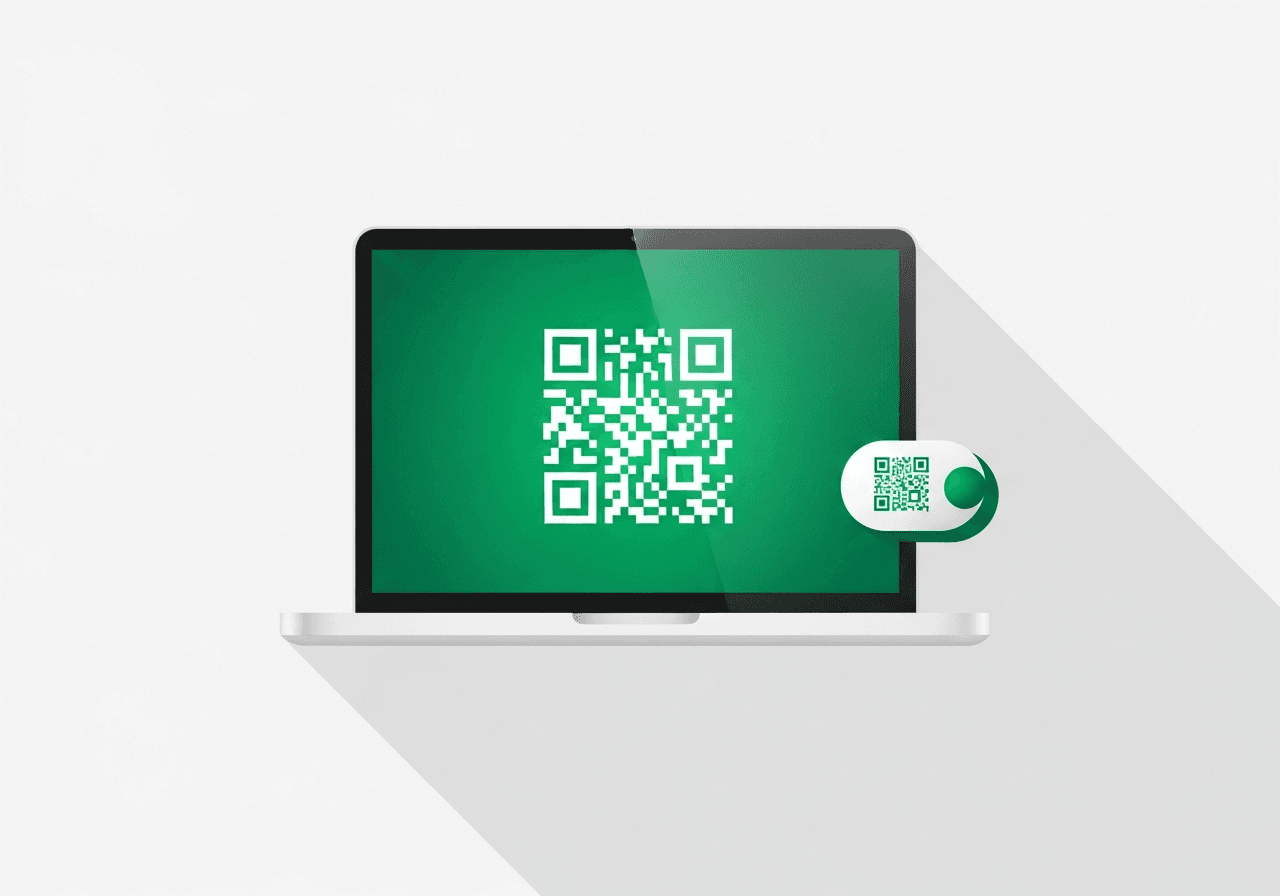 1
1Enter your lot name, spaces, and rate. Park Graph mints a branded QR code that links straight to your payment page.
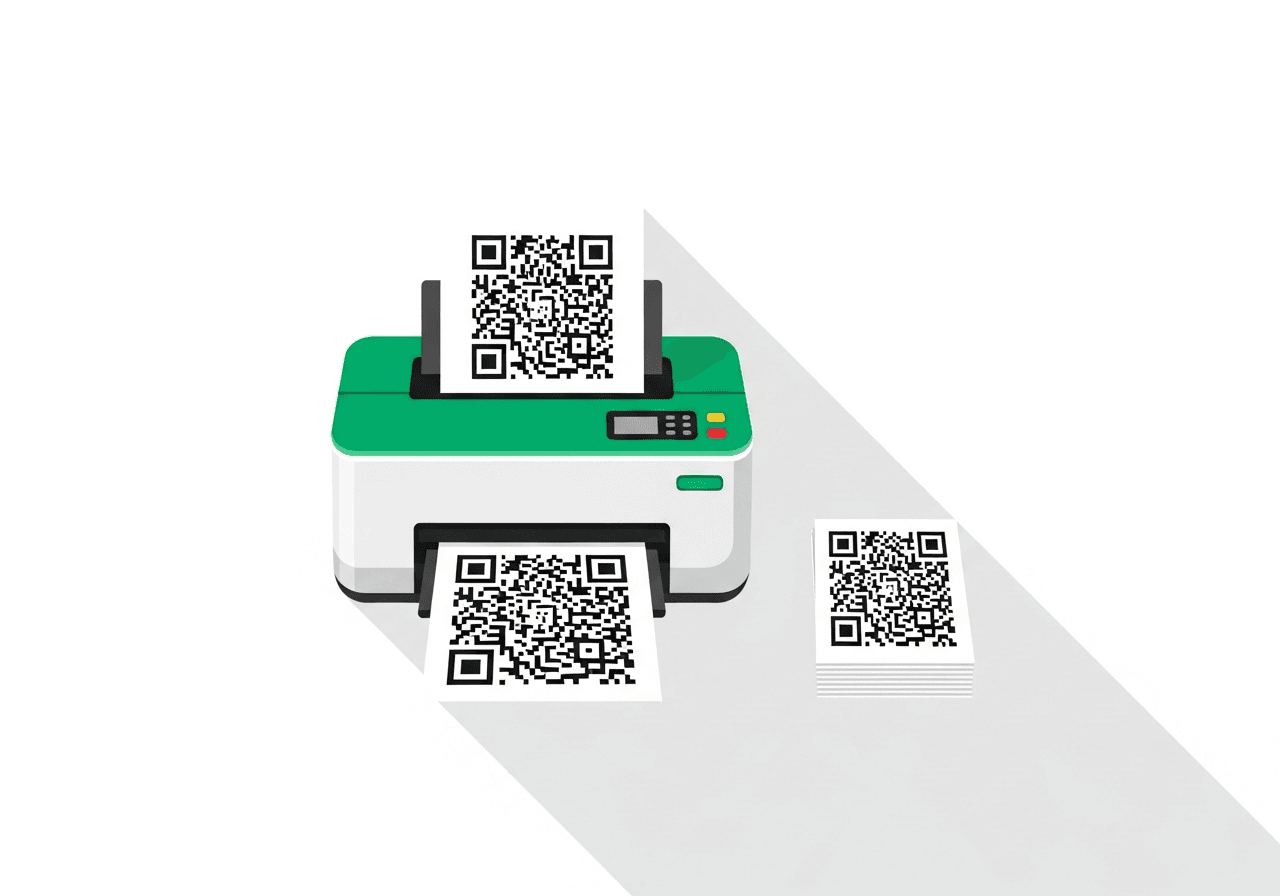 2
2Send it to any standard printer. Laminate the sheet for weather protection — that is your entire hardware bill.
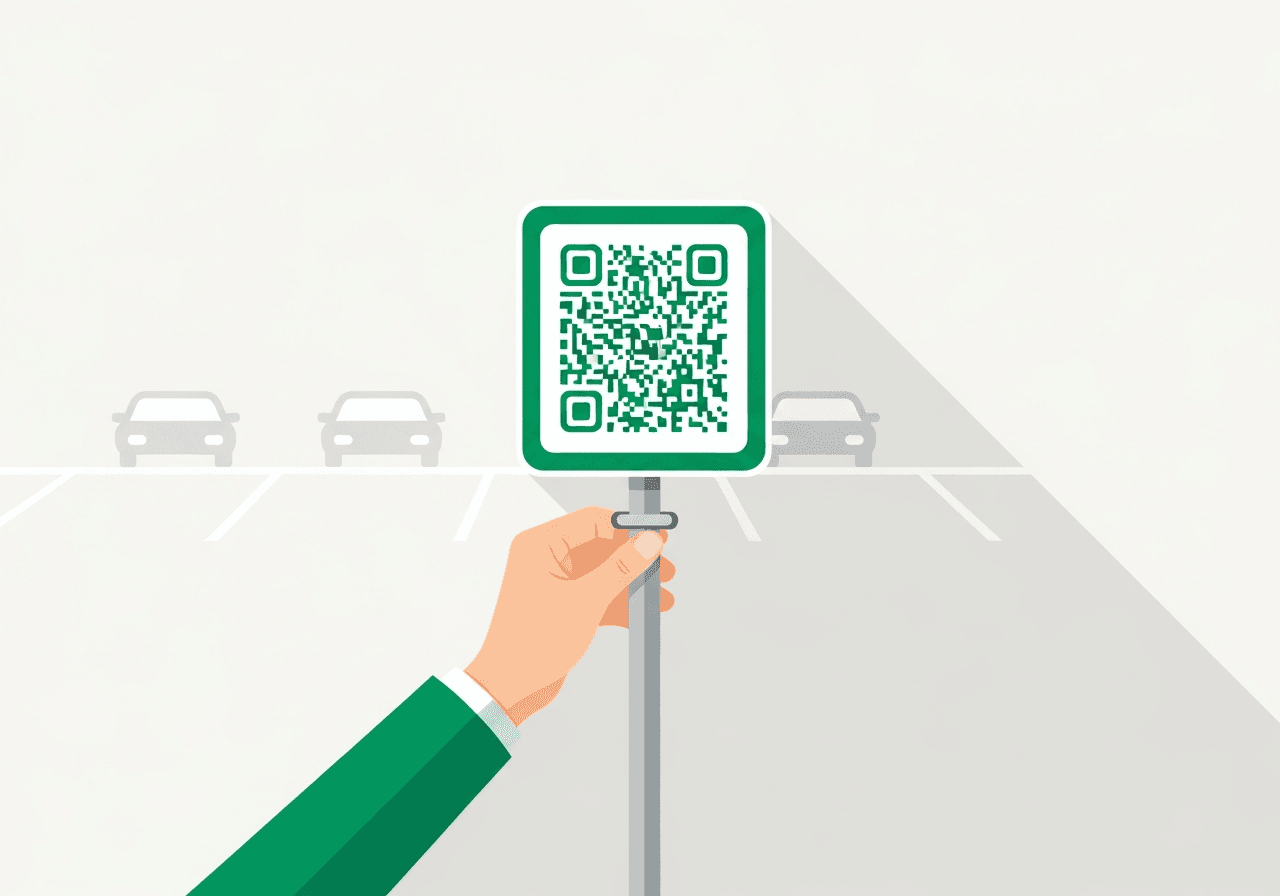 3
3Mount it on a post at the entrance and any major pedestrian path. No gates, no wiring, no installer visit.
 4
4Drivers scan and pay; revenue lands in your dashboard in real time and in your bank within two business days.