Lot owner guide
Private Parking Lot Towing and Booting Laws: All 50 States
All 50 states at a glance
Sort any column. “No specific statute found” means we checked the state code and official pages on October 29, 2026 and found no statewide rule; a city rule may still apply.
| Law | ||||||
|---|---|---|---|---|---|---|
| Alabama | Yes, with signs | No specific statute found | Each entrance; 2-in reflective letters | Signs up 24 h before a tow | No specific statute found | |
| Alaska | Yes, under contract with the owner | No specific statute found | No specific statute found | Certified letter to owner within 7 working days | Lien covers towing and storage; no cap | |
| Arizona | Yes, with signs | Restrictedboot fee $90–$150 | Entrances; restrictions, where cars go, phone | No specific statute found | Cities set tow rates; boot $90–$150 | |
| Arkansas | Yes, by licensed towers | Restrictedcities and counties may regulate | Set by local ordinance | Tower tells police within 2 h | Local ordinances may cap | |
| California | Yes, with signs | No specific statute found | Every entrance; 17×22 in; 1-in letters | Owner tells police within 1 h | No more than police or CHP rates | |
| Colorado | Yes, with signs | Restrictedremoval max $160 | Entrance and lot; 1 sq ft; 1-in letters; 3–8 ft high | Residential: 24-h windshield notice | PUC caps: $211.11 tow, $40.56/day | |
| Connecticut | Yes, with signs or 48-h notice | Bannedexcept private colleges and schools | Every entryway; 12×18 in; 1-in letters | Signs, or note on the car 48 h before | DMV rate schedule | |
| Delaware | Yes, with signs and a contract | No specific statute found | All entrances; 1-in letters | Written owner OK for each tow | $250 tow; $50/day storage | |
| Florida | Yes, with signs | No specific statute found | Each driveway; 2-in reflective letters | Signs up 24 h before a tow | Rates filed with local police | |
| Georgia | Yes, with signs | Restrictedpermit and local ordinance | Entrances; 12×18 in; ¾-in letters | Signs posted before enforcement | State maximums; first 24 h storage free | |
| Hawaii | Yes, with signs | No specific statute found | Entrances; 2-in reflective letters | Mailed notice within 15 days | Tow $75 + $7.50/mi; storage $25/day | |
| Idaho | Yes, with signs | Yeswith signs | Conspicuous; tow or boot at owner's cost | No specific statute found | Rate sheet filed and posted | |
| Illinois | Yes, with signs | No specific statute found | 24×36 in; 4–8 ft high; lit or reflective | No wait; sign must list charges | Within ICC maximums | |
| Indiana | Yes, in posted tow-away zones | No specific statute found | At the zone; 5–7 ft high | Police within 2 h, where required | Storage within state rates | |
| Iowa | Yes, via police or a garagekeeper | No specific statute found | No specific statute found | Certified mail within 20 days | No specific statute found | |
| Kansas | Where a city or county allows | No specific statute found | No specific statute found | Tower tells police within 2 h | Set by city or county | |
| Kentucky | Yes, with signs | No specific statute found | Clearly visible at the tow-away zone | Tower tells police within 2 h | Drop fee max half the tow fee | |
| Louisiana | Yes, with signs | Restrictedfree if not off in 90 min | Entrances; 18×24 in | Contract or police OK first | PSC-set fees | |
| Maine | Yes | No specific statute found | No specific statute found | Owner tells Secretary of State | No specific statute found | |
| Maryland | Yes, with signs and written OK | No specific statute found | 24×30 in; tower, fees, hours | Police 1 h; owner mail 7 days | 2× local impound fee, or $250 | |
| Massachusetts | Yes, with signs; police first | No specific statute found | Signs forbidding parking | Written notice to police first | Tow $132; storage $35/day | |
| Michigan | Yes, with signs | No specific statute found | Each entry; 2-in letters; tower contact | Signs up 24 h before a tow | No specific statute found | |
| Minnesota | Yes, at the owner's request | No specific statute found | No specific statute found | No specific statute found | No specific statute found | |
| Mississippi | No specific statute found | No specific statute found | No specific statute found | No specific statute found | No specific statute found | |
| Missouri | Yes, with signs or a wait | No specific statute found | All entrances; 17×22 in; 1-in letters | No signs: 10 h or 96 h wait | Maximum fees posted on the sign | |
| Montana | Abandoned cars, after 5 days | No specific statute found | No specific statute found | Police remove after 5 days | No specific statute found | |
| Nebraska | Yes, with signs | No specific statute found | Readily visible; rules and contact | Tower tells police within 24 h | No specific statute found | |
| Nevada | Yes, with signs; police told | Restrictedresort-hotel garages only | Plain view; police phone | Police told of each tow | Boot removal max $100 | |
| New Hampshire | Yes; police told promptly | No specific statute found | Conspicuous notice in the lot | Police told as soon as possible | Reasonable; notice needed to charge | |
| New Jersey | Yes, with signs and a contract | No specific statute found | Entrances; 36×36 in; hours, tower, fees | No specific statute found | Within any town fee schedule | |
| New Mexico | Yes, with written OK and photos | No specific statute found | Commercial and apartment lots | Owner signs each tow | No specific statute found | |
| New York | Yes, with posted notice | Restrictedposted notice required | Operator and tower name, address, phone | No specific statute found | No specific statute found | |
| North Carolina | Yes, with signs | No specific statute found | All entrances; 24×24 in; tower phone | Signs up 72 h before enforcing | No specific statute found | |
| North Dakota | Abandoned cars, at owner's request | No specific statute found | No specific statute found | Tower tells police within 12 h | Storage max $50/day | |
| Ohio | Yes, in posted tow-away zones | No specific statute found | All entrances; 18×24 in | Tower tells police within 2 h | PUCO fees; drop fee max half | |
| Oklahoma | Yes, by licensed towers | No specific statute found | No specific statute found | Tower files a report with DPS | OCC maximum rates | |
| Oregon | Yes, with signs or written OK | No specific statute found | Plain view; parking rule stated | Abandoned cars: 72-h notice on car | Cities and counties may cap | |
| Pennsylvania | Yes, with signs | No specific statute found | Entrances; 3-in letters | No specific statute found | Storage max $25/day unless town sets | |
| Rhode Island | Yes, by PUC-certified towers | No specific statute found | No specific statute found | No specific statute found | PUC tow tariff | |
| South Carolina | Yes; signs on commercial lots | No specific statute found | Commercial lots: each entrance | Tower tells police immediately | No specific statute found | |
| South Dakota | Abandoned cars, with written OK | No specific statute found | No specific statute found | Certified mail to the owner | No specific statute found | |
| Tennessee | Yes, with written authorization | No specific statute found | No specific statute found | 12-h wait unless blocking or illegal | No specific statute found | |
| Texas | Yes, with signs or notice | Yesunless a city bans it | Each entrance; 18×24 in; set wording | Signs up 24 h before a tow | TDLR maximum fees | |
| Utah | Yes, with signs or 24-h notice | No specific statute found | 24×18 in; reflective; set wording | No signs: note on car 24 h | UDOT maximum rates | |
| Vermont | Abandoned cars after 48 h | No specific statute found | No specific statute found | 48 h unattended first | No specific statute found | |
| Virginia | Yes, with signs | Yesin place of towing | All entrances; tow and boot warning | Tower tells police promptly | Drop fee max $25 or local limit | |
| Washington | Yes, with signs or after 24 h | Bannedfor private owners | Each entrance; hours and phone | No signs: 24-h wait | No specific statute found | |
| West Virginia | Yes | No specific statute found | No specific statute found | Tell state police after removal | No specific statute found | |
| Wisconsin | Yes, with signs; police first | No specific statute found | Entrance and near the car; 2-in letters | Police told before removal | Tow $150; storage $25/day | |
| Wyoming | Abandoned cars, on written request | No specific statute found | No specific statute found | Notice on car 5 days first | No specific statute found |
State-by-state notes
Alabama
Alabama's sign rule is detailed: reflective letters on a permanent post, maintained for 24 hours before any tow.
Alaska
Alaska gives the tower a lien for its charges; check your city code for sign and rate rules.
Arizona
Arizona's booting law (SB 1205) set a $90–$150 boot-fee band; cities still regulate towing rates.
Arkansas
Arkansas licenses towers through its Towing and Recovery Board and leaves most lot details to cities.
California
California's sign must warn of removal at the owner's expense and give the police phone number; higher-than-rotation charges are excessive.
Colorado
Commercial lots need no windshield notice; signs must read “Authorized Parking Only.” A boot must come off once the driver pays.
Connecticut
Connecticut's 2025 act, effective October 1, 2025, also bars owners from issuing private parking “citations.”
Delaware
Delaware wants a fresh written authorization from the lot owner for every private tow.
Florida
Florida allows a private tow only when every § 715.07 condition is met, the sign rules included.
Georgia
Georgia's HB 551 (2025) brought booting under state permits and local ordinances; consumer.georgia.gov summarizes the rules.
Hawaii
Hawaii's notice must state the maximum charges allowed by law and a consumer-information phone number.
Idaho
Idaho's statute names booting alongside towing; the sign must warn drivers of both.
Illinois
Illinois lets cities, Chicago included, impose greater notice rules than the state minimum.
Indiana
Indiana's tow-away zone sign must say the area is a tow-away zone and how to reclaim the car.
Iowa
Iowa's rule centers on abandoned vehicles; check your city code before towing a short-term trespasser.
Kansas
Kansas leaves private-lot towing to city ordinance or county resolution.
Kentucky
Kentucky towers must photograph the car before moving it; signs say the lot is private and cars are towed.
Louisiana
Louisiana's boot rule is unusual: no fee is owed if the booter does not arrive within 90 minutes.
Maine
Maine's statute covers vehicles left on private property without permission and the paperwork afterward.
Maryland
Maryland counties may set their own tow fees; the statute caps them only where local law is silent.
Massachusetts
Massachusetts sets trespass-tow maximums through the Department of Public Utilities.
Michigan
Michigan's § 252k governs removal from private property; check your city code for rate limits.
Minnesota
Minnesota's statute is short on lot rules; check your city's ordinance before towing.
Mississippi
SB 2635 regulates nonconsensual towing of commercial motor vehicles only; we found no statewide rule for cars.
Missouri
Missouri lets unsigned lots tow only after a wait: 10 hours on small residential lots, 96 otherwise.
Montana
Montana's statute addresses abandoned vehicles; for short-term trespassers, check city code.
Nebraska
Nebraska's DMV explains the private-property rules and the tower's 24-hour police report.
Nevada
Nevada allows boots only in parking structures run for licensed resort hotels.
New Hampshire
Without conspicuous notice, New Hampshire owners cannot pass towing and storage costs to the driver.
New Jersey
New Jersey's Division of Consumer Affairs publishes the act; towns may adopt their own fee schedules.
New Mexico
New Mexico's private-tow rules live in a state regulation (NMAC), not a statute.
New York
New York City sets its own limits: $125 for a tow with three days' storage and $25 to remove a boot.
North Carolina
North Carolina's signs must be up 72 hours before towing; check city code for booting and fees.
North Dakota
North Dakota's $50 storage cap covers abandoned passenger vehicles, pickups and vans.
Ohio
Ohio caps what a driver pays if they return before the tow truck leaves the lot.
Oklahoma
The Oklahoma Corporation Commission sets maximum nonconsensual tow fees by order.
Oregon
Oregon cities and counties may regulate tow rates, so check local code.
Pennsylvania
Pennsylvania municipalities may set their own tow and storage rates by ordinance.
Rhode Island
Rhode Island prices trespass tows through a Public Utilities Commission tariff.
South Carolina
South Carolina's notice duty falls on the towing company, not the lot owner.
South Dakota
South Dakota requires the landowner's written permission before a tower removes the car.
Tennessee
Tennessee's 12-hour wait does not apply to cars that are illegally parked, blocking or hazardous.
Texas
Texas sign wording, colors and letter sizes are fixed by statute; TDLR licenses towers and booters.
Utah
Utah's sign must use the statute's wording and colors; UDOT sets the maximum tow rates.
Vermont
Vermont's $250 tow cap and booting rules cover public property, not private lots.
Virginia
Virginia localities may set their own tow fees and drop-fee limits by ordinance.
Washington
Booting a car on private property in Washington is a gross misdemeanor.
West Virginia
Inside a city, West Virginia also requires notice to the municipal police.
Wisconsin
Wisconsin's tow and storage maximums are set by the transportation department's rule.
Wyoming
Wyoming routes private-property removals through police on the owner's written request.
Why lot owners are replacing towing with QR payment
Read the table again from an owner's side. Towing takes signs, waiting periods, police reports and a tow company you trust, and when it works, the car leaves and the space earns nothing. The driver pays the tower, gets angry, and rarely comes back.
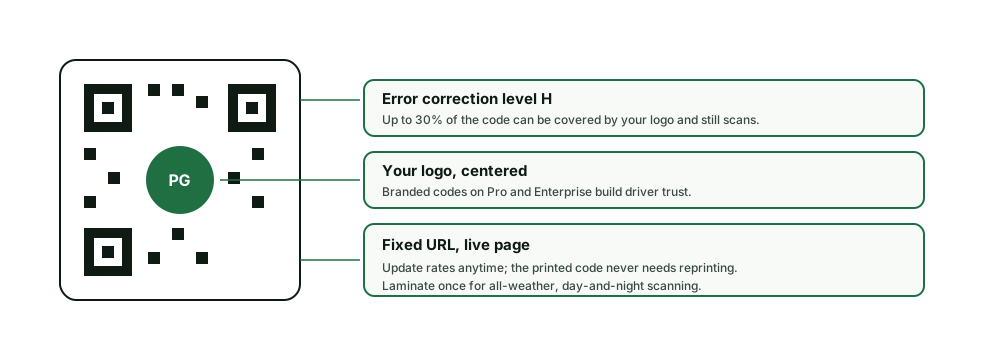
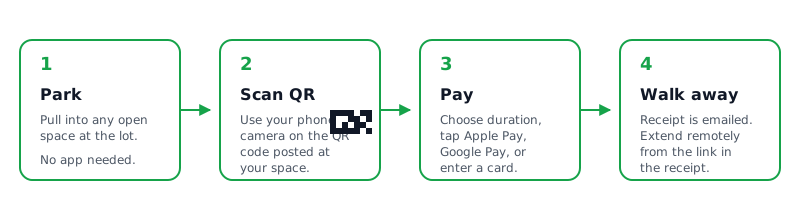
A QR pay sign uses the same post. Drivers scan it, pick a time and pay by card, Apple Pay or Google Pay, with no app. You set the rate, and the money goes to your bank through Stripe. Starter is free, with a 10% fee per payment.
You still decide on enforcement. Check a plate in the dashboard to see whether it paid, then use your own staff or a local tow partner, under your state's rules above, for cars that didn't.
How we checked
We read each state's code and official agency pages on October 29, 2026. Bills that did not pass, city ordinances and law-firm summaries are not state law, so they appear only in the notes. Owners leaving an operator contract can also read how to get out of a parking management contract.
Turn your tow-away sign into a pay sign.
Make a free QR parking sign on Starter, then see what your spaces could earn.
Frequently asked questions
- Can I tow a car from my private parking lot?
- In most states, yes, if you follow the state's conditions first: compliant signs at the entrances, any required waiting period, and a licensed tower who reports the tow to police. A few states cover only abandoned vehicles, and cities often add their own rules.
- Is booting legal on private property?
- It depends on the state. Connecticut and Washington ban it for private lot owners, Nevada limits it to resort-hotel garages, and several states cap boot fees. Most state codes do not mention booting at all, which leaves it to cities.
- What does a tow-away sign need to say?
- Where a state sets rules, the sign usually has to sit at each entrance, meet a minimum size and letter height, warn that cars will be towed at the owner's expense, and name the towing company and a phone number. Texas, Utah and Florida also fix the wording.
- What does “No specific statute found” mean?
- It means we searched the state's code and official agency pages on October 29, 2026 and found no statewide rule for that column. A city or county rule may still apply.
- Is this legal advice?
- No. It is a summary of public statutes and official pages, checked on the date shown. Laws change and cities add rules, so confirm with the source link or a local attorney before towing or booting.