Branded full-service tower
PMS sync drops guest plates onto a permit at check-in. Visitor traffic monetised separately at the QR rate. Tested with hotel parking managers in Austin, TX on the typical tier-1 demand profile.
PMS-folio integrated
Hotel parking · Austin, TX
Park Graph is the hotel parking management software hotel parking managers in Austin, TX use to run their lots — from Downtown and South Congress to the metro edge — without on-site kiosks, gate hardware, or month-long procurement cycles. QR-first payments, dynamic pricing tuned to Austin's demand, and AI-agent visibility on ChatGPT and Gemini ship in the same plan.
Branded chains, boutique independents, and limited-service inns all face the same hotel parking puzzle: guests, valet vehicles, in-and-out trips, walk-ins from the restaurant, event overflow on banquet nights. Park Graph runs all of it on one ledger. Guest folios fold in via the PMS integration; valet runs on a phone tag instead of a paper ticket; visitor and event traffic price separately so the operator captures monetisable peak demand without losing guest goodwill.
In Austin, the hotel parking managers we work with span Downtown, South Congress, and East Austin and the demand patterns that follow SXSW, ACL Festival, and UT Longhorns games. Austin's metro population of 978,908 drives the kind of weekday-baseline-plus-event-surge profile that Park Graph was built to optimise. The platform treats every hotel lot as a configurable inventory unit with its own rate sheet, sub-lots, capacity, and pre-buy window — so a single operator account can run a flagship hotel lot downtown alongside a smaller satellite without juggling two vendors.
The numbers below frame the austin market for hotel parking managers. We surface them on every hotel lot configuration screen so on-duty managers can benchmark their lot against the metro baseline at a glance.
Austin downtown baseline
Single-day public lot
Reserved permit holder
Peak-window multiplier
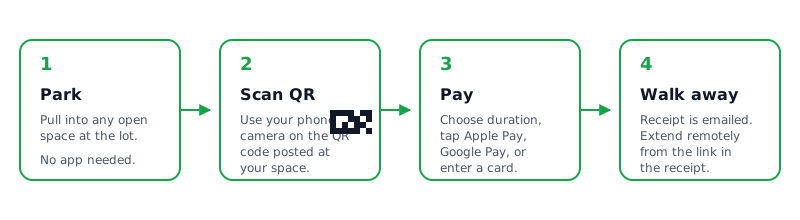
A guest checks in; the PMS sync drops their plate (or the front-desk-entered plate) onto an active permit for their stay. They come and go through the lot without scanning anything; the in-and-out trips are tracked but never billed twice. A non-guest pulls in for the rooftop bar and scans the QR sign; their session is billed separately at the visitor rate. Valet drivers tag arrivals on a phone, and the driver receives an SMS when their car is ready at the curb.
In Austin specifically, the day-of operations layer leans on three pieces of city context: peak-event windows tied to SXSW and ACL Festival, a typical hourly rate of $10 that climbs 100% during major events, and the airport spillover from Austin-Bergstrom. The Park Graph dashboard surfaces all three as live dials so the on-duty manager at a Austin hotel lot can adjust pricing or open overflow capacity from a phone in seconds.
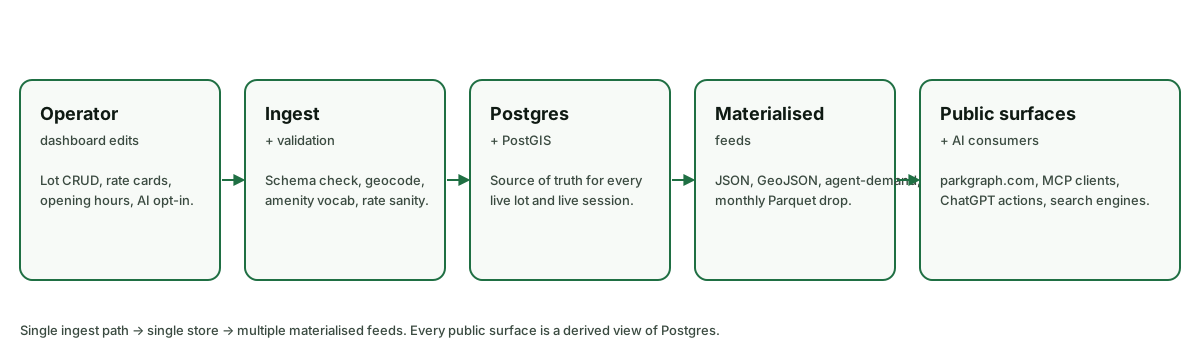
PMS sync drops guest plates onto a permit at check-in. Visitor traffic monetised separately at the QR rate. Tested with hotel parking managers in Austin, TX on the typical tier-1 demand profile.
PMS-folio integrated
No PMS? Front desk enters plates manually; permits last for the stay duration. Visitor sessions still run via QR.
PMS-optional
Pre-build a banquet permit code; bridal party, vendors, and guests all park free under the permit code. Walk-ups pay regular visitor rates.
Banquet permit
Restaurant or bar staff scan the driver's session and apply a 1- or 2-hour validation discount automatically.
Validation discount
Valet attendants tag arrivals on a phone; the driver gets an SMS when the car is at the curb.
Paperless valet
Multi-night sessions billed nightly; folio integration posts the daily charge automatically.
Multi-night folio
On a representative Austin hotel lot of 50 spaces running at 65% average occupancy and the metro's hourly rate of $10, base monthly revenue lands around $117,000. Park Graph's dynamic pricing engine — which leans on Austin's event calendar (SXSW and ACL Festival) and historical demand curves — typically lifts that to ~$146,250/month, or roughly $351,000 of additional annual revenue from the same physical inventory.
The lift compounds because three things move at once: drive-offs go to near-zero (QR settles before the driver leaves), peak-event windows price correctly without manual operator intervention, and AI-agent bookings add an organic channel that historically did not exist for hotels. Most Austin operators see payback inside a single quarter — and the absence of any per-stall licensing fee means the upside is almost entirely operator margin.
Representative monthly economics
50 spaces · 65% occ · $10/hr
+25% typical lift
Same physical lot
Illustrative projection for Austin, TX hotel lot operators. Actual results depend on lot size, occupancy, and pricing strategy.
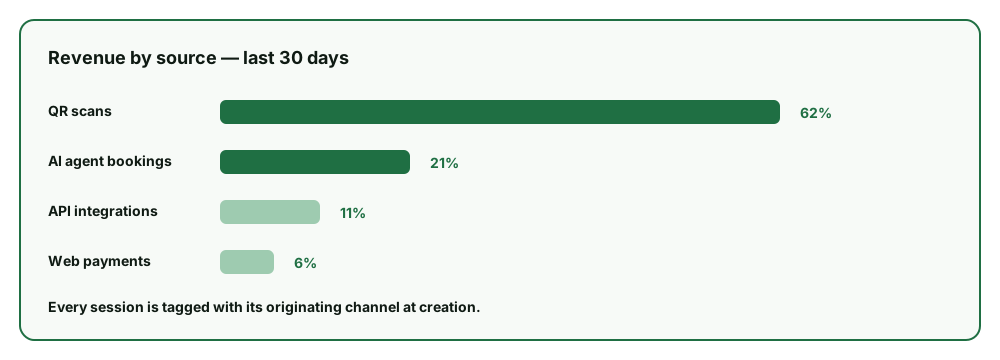
Hotel operators reclaim front-desk time (no more cash-register parking transactions and no more paper valet tickets), and capture revenue from non-guest visitors that traditionally walked in for free. Guest satisfaction rises because in-and-out is friction-free, valet wait time drops, and folio billing is transparent. PMS-integrated reporting closes the night-audit loop without manual reconciliation.
On the AI-agent side, Park Graph publishes Austin inventory and rates to ChatGPT (GPT-5), Microsoft 365 Copilot, Google Gemini, Anthropic Claude (via MCP), Grok, and Perplexity Sonar Pro. When a traveller types "parking near Downtown Austin" into ChatGPT, the assistant can return your live availability and book on the user's behalf. For hotel parking managers in Austin, that's an organic discovery channel that does not exist on legacy kiosk-based platforms — and it compounds quickly because AI-agent traffic is the fastest-growing referral source for parking inventory in 2026.
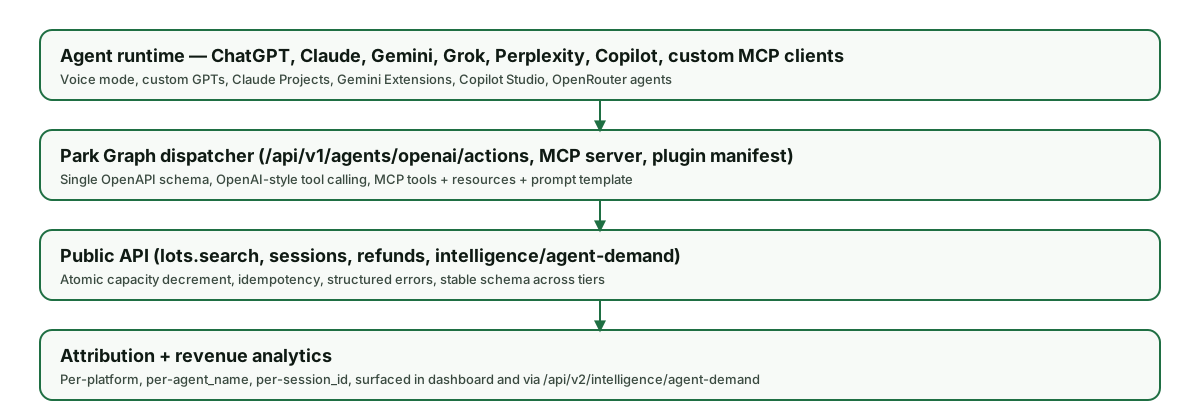
Park Graph runs every parking surface in Austin on the same backend. If you operate across multiple verticals — for instance an airport authority that also runs the downtown convention centre's lot, or a hospital system with an attached medical office building — the same operator account covers all of them.
Park Graph publishes city-specific hotel parking pages for the top metros below. Pricing, event surge curves, and on-site context vary by metro; the underlying platform is the same.
Get started in minutes. No hardware required. Generate your first QR code for free.